Sunday, September 13, 2015

The Top 5 Apps for Digital Curation, Growth and Reporting

I am a digital media manager which means I spend most of my time creating and posting content on various platforms, then reviewing analytics to share this content to its proper audience. When I first began in this field, I relied heavily on KloutSprout Social and Hootsuite to help me post my content, making sure they met their maximum reach and engagement potential. The following article will not be bashing any of these great tools, if they work for you then keep using them, but there are other new and useful options I have discovered to be even more beneficial.
  1. Publish – As most developers and digital strategists know, Instagram is very picky who they release their API to. For instance, Sprout, Hootsuite, and Latergramme, your options to do anything on Instagram is very limited. On Hootsuite, you can check out what people are posting and you can engage with their content, but they have figuratively the worst publishing option I’ve come across. In fact, it’s so awful that I immediately switched to Publish upon discovering that the well-thought out caption I wrote on my computer had to be completely rewritten when the photo opened in my Instagram app. On Publish, I can attach the image I want, with the language I need and post to Instagram. While the Instagram app still needs to open, everything transfers over and all you have to hit is “post.” The Publish app’s algorithm also figures out when users are most active and gives you the option to allow them to post for you at these times.

  2. SumAll – If I could physically hug this particular digital marketing tool, I would. Though I have only dabbled with the free account, I know this tool has the potential to improve any social media manager’s workflow in a heartbeat. Good engagement-provoking content is absolutely the most important factor to an excellent digital media strategy. You WANT to get your audience talking so you can respond to them, but how would you know you’re even hitting the right demographic without analytics? The key to an over-all effective digital strategy are allowing insights and reports to work hand-in-hand with content curation and engaging with the consumer. SumAll reports takes all of the tedious, time-consuming elements of writing social media presentations by preparing them for you, allowing managers more time to focus on starting conversation with their customers. In addition to its reporting features, SumAll also offers Insights and Audience Boost services.

  3. Crowdfire – I have to admit, I just started using this app, but it’s incredibly useful when it comes to my online fan-base. With Crowdfire, I am able to find out who is following my client that I may not be following back, and who isn’t following me that I may be following. This encourages me to either strike up a conversation, or remove them from my list. I can see who recently followed or unfollowed me, and which of the accounts I follow went in inactive. I can also use their Copy Followers tool to follow accounts that follow my competitors who may be interested in my clients’ services, too. Crowdfire users are even able to find out who is tweeting nearby with specific hashtags and keywords. There are a ton of other great features I still need to discover, but what I’m using now is nothing short of extremely beneficial.

  4. Tweet Deck – Tweet Deck is easily still the greatest Twitter scheduling tool. Its interface is almost exactly like that of Hootsuite, but it is strictly for Twitter, because it's made by Twitter. I think what I like the most about Tweet Deck is that I can choose to shorten my links with Twitter or with Bit.ly. I have always been an avid Bit.ly user. I love the insights provided through Bit.ly and how easily accessible they are. Hootsuite users their own link shortening tool, Owl.ly, but you have to actually pair it with your Hootsuite account to review your analytics. Plus, I have always found owl.ly links to be less attractive than Bit.lys or short links. It just screams “GUESS WHAT MOM AND DAD? I’M USING HOOTSUITE.” I know, I know… beauty is in the eye of its beholder. Tweet Deck allows you to schedule your tweets based off of your most optimal time discovered from your SumAll reports (Hootsuite does allow you to do this automatically.) With Tweet Deck, you can customize your columns and even follow along with trends specific to your services. You can follow back, tweet, RT and favorite from one simple dashboard.

  5. The native platforms themselves! – Of course from a scheduling mindset, I use Tweet Deck for tweets and I log into Facebook for publishing content but nothing beats posting in real time – NOTHING! You won’t miss anything if you never logout. I am always checking my clients’ accounts when I check my own and it has done wonders for me in terms of going beyond simply scheduling and checking data. As we know in the world of social media, it’s extremely important to allow content, data and engagement to work together. When we can interlink these three strategies to work hand-in-hand, we see a social strategy that is not only good looking, but effective! Twitter and Facebook both have awesome analytics tool that allows you to see what your fans like based off of demographic.
These are simply my opinions of the best tools to use for social media marketing. I know that there are some great ones out there, but these work best for me. This industry is ever changing and constantly growing, and I want to grow with it, so if there are other options you think I should try out, let me know!
Adele Stewart is the Director of Social Media and Public Relations blogger.
Twitter: @adelemariestew​
LinkedIn: /AdeleMarieStew

Friday, July 10, 2015

How a General Contractor Compares to an SEO Professional

"Consider a business owner who is looking to build an entirely new location for his or her office. The land has been purchased and now it needs to be cleared, leveled, and excavated. The foundation must be laid, the structure built, various utilities installed, and countless other projects must be completed before the new building can open for business. Would you expect to see a well-rounded general contractor operating a bulldozer this week, pouring concrete next week, framing walls the week after, and wiring the building for electricity a month later? In a construction, a single person, no matter how skilled, would rarely take on a number of such specialized roles; instead, the general contractor will bring in subcontractors to handle each area with precision and specific expertise. The same principles can apply to increasing your company’s online visibility, as a team of niche SEO professionals with individual areas of strength can be much more efficient and successful than a single, SEO “general contractor.”" 
- Greg Wildman, OVC Lawyer Marketing Blog, July 10, 2015.

Tuesday, June 9, 2015

3 Tips to Overcome Your Social Media Fears

I posted this on the Epic Web Studios blog last summer, but I think it's worth revisiting. As we began to head toward the second month of the new year, it's important to remind organizations just how important social media is for their business.
-------------------------------------------------------------
6/4/2014 -- Social Media is exploding. What started out years ago as simply social networking, has turned into digital advertising, media marketing, and so much more. When Epic Web first opened its doors, it was a Web Development company that sold social media as an added package. Today, it sells Social Media as its own entity.
However, many organizations and companies face a “Social Media Anxiety” –a fear of creating a social presence for their business. Here are tips on how to alleviate your social anxiety:
1. Use Social Media as Your CRM (Customer Relationship Management)
Take the time to learn the benefits social media engagements have your business. Some fear social media, as it is a direct way to receive customer complaints and insults. They fear they will say the wrong thing and will tarnish the image they have set up for their brand.
HOWEVER, it’s imperative to humanize your brand. Just like stopping at the customer service desk in the physical world, social media users are expecting to engage with your brand and receive responses from another human being.
You would be surprised how much a person’s tone can change after a representative reaches out to them over social media.
2. Use Discovery on Platforms to Re-Strategize
As stated in a previous blog post, social media is the best marketing research tool right now. Engagements and interactions bring your customers’ needs into the light. When you are writing your strategic plan for the next quarter or year, you can base your next big move with social media’s help.
Your customers are chatting about products and brands right now all over the internet. Observe who they’re talking about and mirror that campaign as best you can with your own products/business. Analyze how other companies and organizations handle customer service and make a list of how you can do it better.
Not only will your customer’s suggestions and responses be of help to your market research, but your social media insights can help you determine who you should be selling for. Run various campaigns and see what works for your clients, and use those analytics to re-strategize.
3. Engage with Your Customers Frequently
The most important thing you can be doing on social media is actively engaging with your fan base. Whether it’s answering complaints, responding to suggestions, or plain old thanking your customers – show your customers that you appreciate their support! Chances are if you are actively engaging with them, they will encourage others to try out your business as well.
Your customer’s are your biggest promoters. Their involvement on your social media can do wonders for your business. Show your gratitude by hosting giveaways for your top fans, which in turn will bring more clients to your business. If you help them out, they are likely to help you out too.
Though it seems like an intimidating place to be, social media's benefits are really great for your business/organization. If you’re not engaging online, you are already losing potential customers. Don’t get left behind, take the plunge into social networking today.
If you’re still fearful of social media, contact Epic Web’s Social Media team. They will talk you through your digital marketing stress, and fit you to the next level of social media advertising.
Adele Stewart is a Digital Media Strategist at Epic Web Studios, a web development & strategic planning firm in Erie, PA, and Public Relations blogger. If you have questions about running a successful digital advertising campaign, contact Epic Web’s Social Media team today!

Thursday, May 28, 2015

Startups & the Big Data Revolution

In fact, the skill is proving to be more useful now than ever. Startups all over the country are incorporating big data technology as a major part of developing their business strategy both digitally and traditionally. Simple ideas such as Netflix, Uber and Foursquare became large successes by the use of big data. Even companies in small cities like Erie, PA use data-mining to build their own ideas. In order to be one step ahead of their customers, innovators researched what their potential customers wanted more of, who their friends were and everything the potential customers liked - before the customer even realized it.
According to an article on Datanami.com, Netflix uses machine learning to engage customers and help them determine the user's preference. For example, when an user watches something, they can give a rating which will help Netflix determine what movies and TV shows to suggest to them. They can also see patterns in a user's queue to determine what types of movies they're most likely going to want to watch.
Uber uses regression analysis, which can determine the size of a neighborhood, price of the houses in the neighborhood depending on prices, demographics, schools and other information. According to Datanami.com, Uber uses this information to determine which neighborhoods will be busy on the weekends, which areas have the most bars and clubs, and when to add "surge charges" to their customers' bills. Like Netflix, Uber uses regression analysis to determine customer satisfaction, and since this type of big data is so sophisticated, it can also take other variables like the weather report into factor. According to Datanami.com, "it works best with quantitative data."


Foursquare uses a data-mining method called social network analysis. With this technique, Foursquare essentially finds the greatest "influencer" in a social network group and markets specifically to them, in hopes that said "influencer" will market the product to their friends. Social network analysis is so intricate that out of all the information it collects from the user, it only takes into consideration likes and dislikes, and studies the patterns between people and their ties between those with similar patterns and interests. According to the article on Datanami.com, Foursquare's approach focuses on the importance of one individual in a group and the minimum number of connections between two people. From there it can not only market places, but products and neighborhoods to individuals or one individual directly called a "maven" in big data terms. The maven then recommends this location to their connections and the other friends will follow suit.
Big data isn't  just limited to these digital platforms. Small businesses in areas across the United States are opening up to the idea of taking a non-traditional approach. For instance, four businesses in Erie, PA were able to open debt free from using an innovative fundraising campaign called Quickstarter.
Creator of Quickstarter Kris Wheaton, an associate professor of Intelligence Studies at Mercyhurst University in Erie, studied other Kickstarter campaigns in the Erie area and tried to measure their success. Compared to other cities in the state and nationally, he concluded that the city of Erie was "both underrepresented and had a higher-than-average failure rate." 
Would-be business people have their own skills, but often need some support in designing effective fundraising campaigns on Kickstarter. Intelligence students at Mercyhurst University were paired with these owners to essentially do the "dirty work" for them. Students studied neighborhoods, city-trends, and potential audience in order to develop a strategy that would prove to be most successful on Kickstarter. The four Quickstarters launched by Wheaton and his students were fully funded in less than the allotted 30 days.
Data analysis can be used for many different functions, but ultimately serves one purpose – growing a startup to its greatest and fullest potential.
* This skill is not dying, in fact, it’s becoming one of the most sought-after skill-sets for college graduates. If this is something that interests you, I encourage you to take a look at the Ridge School at Mercyhurst University’s various data science programs.
Adele Stewart is the Director of Social Media at Epic Web Studios, a web development & strategic planning agency in Erie, PA, and Public Relations blogger. If you have questions about running a successful digital advertising campaign, contact Epic Web’s Social Media team today!
Twitter: @adelemariestew​
LinkedIn: /AdeleMarieStew

Friday, May 22, 2015

An Ode to the Brand Marketer

I have been overly obsessed with reading articles about brand marketing - I think my next step in life ought to be picking up a marketing degree. From my current experience, I am learning quickly that advertising is much more than coming up with a catchy slogan and creative imagery to match. There's much more thought to it. 
Sometimes I see an ad and find myself saying, "WHY IS THAT DOG BREAK DANCING?" or, "Why are these Steve Madden ads human Bratz Dolls?!" I find it hard to believe people are buying these products. I mean, who comes up with this stuff? 
The brand marketer does. And chances are, if I'm confused by these ads, I'm probably not the audience they were going after.
Trust me - there is a lot that goes behind market research. Identifying an audience is hard! Sometimes we find that a brand's audience is not at all who they had expected them to be. I've seen brands come into my agency with a "from the gut assessment" target audience of women between the ages of 35-55 years old. But what we have found is that a slightly younger audience is spending the most money on their product, and engaging the most with their brand.
After the research is done, it's someone's job to take this information and turn it into the successful campaigns that bring the audience in through the door, and the products out of it. 
Someone has been creating the ads to captivate a target audience since the late 1600s. Whether they had the same tools as we do today or not, the idea has remained the same - sell your product.
Mercure Galant fashion plate from the 1780s.
The role of a brand marketer revolves around exercising their creative, and I have never believed that creative was something that could be taught, or a degree that could be obtained. Creative people can learn new techniques and what may please an audience, but a successful campaign relies on natural talent, skill and even empathy.
So, here's an ode to brand marketers from the 1600s to today! Take a look at these amazing images and check out this article on Ceros about the Evolution of Print Content.
Kellogg’s Corn Flakes ad from the 1910s.
Baby Ruth Ad, 1940s.
Coca-Cola ad from the 1940s.
Nabisco Premium Saltines billboard from the 1950s.
Chef Boyardee Ravioli ad, 1971
Newport Ad 1980s
Austin Powers, among other celebrities posing for Got Milk, 1990s
--------------------------------------------------------------------------------------------------------------
Adele Stewart is the Director of Social Media at Epic Web Studios, a web development & strategic planning agency in Erie, PA, and Public Relations blogger. If you have questions about running a successful digital advertising campaign, contact Epic Web’s Social Media team today!

Tuesday, February 10, 2015

​YouTube Video Shares Decline as Facebook Video Shares Increase

This was originally posted for my company, Epic Web Studios on 2/10/2015.
If your company isn't using Facebook Video to advertise, it should be.
Facebook Video is now bigger than YouTube for brands according to an article on Socialbakers. In October the website shared data showing an increase in Facebook video shares that was quickly catching up to YouTube. In fact, Socialbakers analyzed over 180,000 Facebook Video posts across 20,000 Facebook pages.
From January 2014 to December 2014, analysts watched YouTube shares decline from almost 100,000 shares to below 60,000 views, while Facebook video shares went from 40,000 to nearly 80,000 giving them the upper hand by 20,000 shares.

Though this is a serious threat to YouTube, it does not necessarily mean the death of YouTube will be any time soon. YouTube videos can still be embedded into brand’s websites. This is definitely a significant advantage to YouTube, as having content on multiple platforms only aids in promoting brand visibility.
Personally, I host most of my clients’ videos on YouTube and download them to share on Facebook. I only like to use Facebook videos for the fact they play right in the news feed, as opposed to taking viewers to a separate site by force. I use both sites for video marketing, but still rely heavily on YouTube to share videos on other platforms while also embedding them on other sites.
At this time, I don’t foresee myself dropping YouTube entirely, though I will be following trends from both sites a bit more closely.
So, will your brand be making the switch from YouTube to Facebook video this year? What are your 2015 predictions for Facebook video shares versus YouTube shares?
Adele Stewart is a Digital Media Strategist at Epic Web Studios, a web development & strategic planning firm in Erie, PA, and Public Relations blogger. If you have questions about running a successful digital advertising campaign, contact Epic Web’s Social Media team today!

Thursday, January 15, 2015

Working From Home vs. Being in the Office


As many folks already know, I took quite a spill recently, shattering my ankle in two different areas when heading into work one icy Monday morning. At first I thought I could handle sitting in my small space at the office and having the ability to prop my foot up on the community couch when I needed a break. That lasted a full day, and barely. I was in sheer discomfort for most of the day. By the time I got home at 6pm, I was ready for bed. 

Because of how exhausted one day made me, I was able to get my work’s network setup on my house computer so I could access everything on the company’s shared drive when I needed it. The first day of this stressed me out a bit, I couldn’t figure out where files were, and it took a while for my co-workers to get back to me on things I considered kind of urgent. Even my boss was stressed and kept me on the line for 30 minute increments at a time which made it nearly impossible to get things done. 

I spent a good hour that evening pulling my hair out, and getting things organized into a “To Do List” for the next day. 

When I woke up and crutched to my computer the next morning, I found that working from the comfort of my own heat, my own windows, my own computer was actually a wonderful feeling, now that I had a game plan. 

I was able to barrel through my list in a few hours, take a nap, eat a hearty lunch and then get ahead of more work when I returned to my desk. Although it seems like a dream come true, I think it’s beneficial to sort through the pros and cons of working from home versus being in the office. 

Pros of Working from Home

Comfort
At work, there are three of us squished in a small(er) room with windows leading to nowhere and no carpet or insulation to absorb heat. Being at home during a Pennsylvania winter is nice. I have access to natural light, and I can control the heat. I can even grab a blanket and keep my pj’s on while I crank out work. 

Focus
There’s no one to talk to, so I am completely zoned into what I’m doing at all times. Aside from the occasional text message or package delivery, I have no distractions at home. I’m pretty lucky in the sense that there aren’t a lot of people in my house or even in my neighborhood during the day, so there is no dire need to pull away from my work. I seem to have more of a drive to get work done when I’m at home, knowing that once I’m done I can sit in front of the television and binge on Netflix all evening. 

Cons of Working from Home

Phones
I don’t have access to the work phone when I’m at home. If someone calls the office looking for me, my co-workers have to give them my cellphone number – which I don’t feel everyone needs to have. I thrive off of my privacy and being in the social media field, I don’t get as much of it as I would like. From past experiences, I have had clients call me over the weekend to request something that could easily have been worked on the next week. I can turn off email notifications when I’m away from my desk or over the weekend, but I can’t just stop receiving calls. 


Interaction 
I really like my co-workers. They are my work family and we come up with some really great ideas when we’re all together. When I am working from home, I find myself messaging them through Google Hangouts throughout the day, or sending detailed emails of ideas I’ve just come up with. Though the focus is great, I miss being able to turn around to say, “Hey, what do you guys think about this post -” and instantly get their feedback. It’s quiet, it’s weird, and doesn’t feel social enough for a Social Media Professional.

That’s my brief list for my short time away from the desk. I suppose it really could go one of both ways – I could stay home and get nothing done, or stay home and get everything done. 

What is your preference? At home? In the office? Pros? Cons? I want to hear your thoughts!

Wednesday, January 14, 2015

Updated Profile

I spent a few hours the other night finding my most successful posts, ads, and web development.
I hope that this will give you all a solid glimpse of what exactly I am capable of in the world of digital marketing.


Please take a look at my site and offer any feedback you'd like! 
It is a work-in-progress, but I appreciate constructive criticism.


Tuesday, November 18, 2014

Snapchat Cashes In with Snapcash

This article was written by Adele Stewart for Epic Web Studios Blog on 11/18/14 and can be found here.
On Monday night, Snapchat users were surprised to find a Snapvid from “teamsnapchat” announcing their new feature “Snapcash.” Snapchat revealed their recent partnership with Square Cash accompanied by an over-the-top and almost unnecessarily flashy “A Chorus Line” style song and dance video.
For those of you who need clarification, the quick picture/video sharing app Snapchat is partnering with Square Cash, an app that allows users to send and request money for free. Square Cash hopes to make splitting the check, lending money and pay backs a lot easier between friends. Like most mobile wallets Square Cash hasn’t really broke through the system quite yet, but with the help of Snapchat’s 100 million (and then some) monthly users, this might be just the thing they need to edge out apps like Venmo, PayPal, Soft Card and Google Wallet.
As many are already aware, Generations Y and Z spend most of their time buried in their smart-phones and most of their money is laid to rest within those phones’ apps. Snapchat has found a way to quickly infiltrate this market by offering p2p payments between close friends, and emerge into a group of young people who haven’t really thought about the importance of financial awareness before.
Some digital marketing sources see this as a way to better target Snapchat’s newly released ads feature. Square Cash’s terms of service permit “third-party advertising and analytics,” which release user’s age, phone number, and bank card information. With these specific details, they are now able to target paid advertising to exact demographics instead of blindly shooting movie trailers at the general public.
Personally, I knew that Snapchat was going to “cash in” at some point, but I was not anticipating such a quick and ironic sequence. During the World Cup when Snapchat allowed users to upload chats to a Live Story, I figured that maybe they were getting paid to allow attendees to subliminally advertise the event itself. These Live Stories of video and imagery occur regularly now during highly attended about events like D1 college football games, NBA games, and even India's Diwali celebration. Within the next few months, I started seeing ads for movies – namely ones I was never going to see like “Ouija” and “Dumb and Dumber To” – which led me to believe Snapchat was tired of being an ephemeral media sharing app, and was seeking to finally monetize off of their popularity.
With all of this in mind, do you see yourself sharing cash with your friends via Snapchat? With the constant ads being thrown into your feed much like Twitter and Facebook, do you think you’ll continue to use the app? Or do you see yourself deleting it and waiting for the next best thing?
Sound off in the comments below!
Adele Stewart is a Digital Media Strategist at Epic Web Studios, a web development & strategic planning firm in Erie, PA, and Public Relations blogger. If you have questions about running a successful digital advertising campaign, contact Epic Web’s Social Media team today! 

Thursday, November 13, 2014

Digital Marketing for Gen Z: Can Facebook “Even”?

I originally posted this to Epic Web Studios' blog, but wanted to share it on here too.

Once upon a time in a far off digital land, there was a social media platform called Facebook that consumed much of Generation Y’s time in “liking” photos and posting comments. As generations grew and various interfaces emerged, Facebook seemed to remain popular with Gen X but would the younger Gen Z follow along with the Facebook trend?

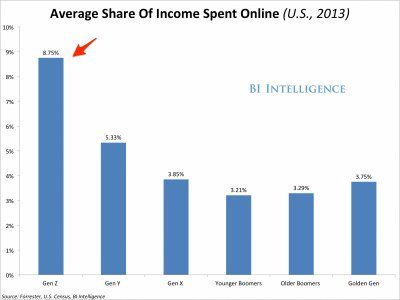
Recent studies show that Millennials and Gen Z spend “a significant amount of their time online,” and a lot of that time has converted into spending actual dollars online. Gen Z spends almost twice as much money than Gen Y, thus making it important for marketers to follow along – what platforms are Gen Z finding ads from?

image


As a 25 year old female, a lot of the ads I wind up following come from Facebook.  I don’t always click on Facebook ads (come on – I’m in digital advertising, I know better) but when I do, I typically end up spending money on a dress or a piece of jewelry I really don’t need. Plus, Facebook’s cleverly installed Custom Audience Pixels follow me from the Designer Handbag page on ThredUp to my Facebook news feed the second I log back in. With Millennials dominating Facebook, where is Gen Z hiding… and where are they spending their hard earned babysitting dollars online?

Kids are leaving Facebook. In fact, most aren’t even on Facebook – they begin their social media exploration at ages 10 or 11 through Instagram – posting poorly angled selfies and discolored photos of One Direction posters.  With platforms like Instagram, Vine and Snapchat is it safe to say that Facebook is dead?

The latest Cassandra report found that “nearly half of young people] prefer that brands communicate with them on Facebook — over YouTube, Twitter, Instagram, Pinterest, and Tumblr. As they use Facebook more often than other platforms, it’s only fitting they want brands to reach them this way."
They also discovered that while each social medium has particular strengths and weaknesses for marketers, when asked, the young don’t just want to see content, but rather, according to Cassandra, brands "need to provide value, relevancy, and interactivity."

As for advertising, Facebook can help digital marketers customize specific “native” ad placements based on Facebook user data like age and gender, as well as advertisers’ customer data and Custom Audience Pixels.

So in the end, while it seems that kids aren’t quite on Facebook, they will be, and Facebook is already to welcome them to their privacy-intrusive digital marketing network with open arms.
What do you think? Should marketers continue to advertise for the big-spending youth on Facebook?

Adele Stewart is a Digital Media Strategist at Epic Web Studios, a web development & strategic planning firm in Erie, PA, and Public Relations blogger. If you have questions about running a successful digital advertising campaign, contact Epic Web’s Social Media team today! 
LinkedIn: /AdeleMarieStew

Tuesday, September 9, 2014

Social Media Effect

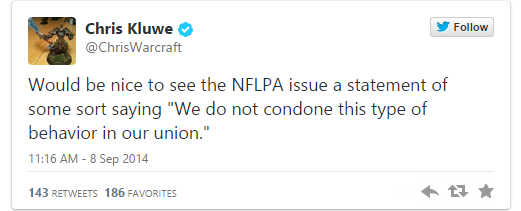
If there is anything you've learned this week, hopefully it is that social media works. In case you haven't been following along, on February 15, 2014, Baltimore Ravens running back Ray Rice, received a two-game suspension for punching his then fiancee Janay Palmer, in the elevator of an Atlantic City casino. Up until yesterday, the only footage seen was Rice dragging Palmer's unconscious body out of the elevator.

After the NFL's investigation, they suspended him for two games, much to many people's dismay. How is a "two game break" justifiable punishment for someone who knocked his fiancée unconscious?! By the end of July, NFL commissioner Roger Goodell claimed that Rice wasn't entirely to blame for the incident, saying Palmer provoked him and was even seen hitting her fiancée first. Despite the very public issue, Rice and Palmer wedded on March 28th.

On September 8, TMZ publicly released elevator footage of Ray Rice’s assault on his then fiancée, during the week of the Raven's first big rival game against the Pittsburgh Steelers. The video was disturbing and so controversial that football players, journalists fans and even celebrities immediately took to social media to express their feelings.


Due to the outcries from many over the immorality of the situation, against Ray Rice and the actions taken by the NFL, the Ravens have decidedly terminated Ray Rice's contract with the team as of September 8th.. Following suite, the NFL, who have claimed that they "never saw this footage," have also terminated Rice indefinitely from the league. This is the "Social Media Effect” – had this not been brought on by a social media hurricane, action would not have been taken. 


I believe that without Twitter, Ray Rice would still be sitting the first two games of the season out, and playing as their running back by week three. Your thoughts? Opinions?


Sunday, September 7, 2014

Social School

Hootsuite recently asked their followers if they wished social media is a prevalent thing when they were in school. Users answered just how I expected:


So obviously they were very excited. It does make you stop and think, though... If I had social media when I was going through grade school and high school, Facebook and Instagram would have saved me my most recent hassle of pitching things from my memory box. If social media existed as it does now, I would have been able to upload some of my early dance recitals and concerts. I'd be able to delete some of the horrific photos of me with nappy hair, braces and thin wire framed glasses. I definitely believe if I had social media when I was in school, that the issue of cyberbullying would have been addressed years ago and that makes this idea a little bit scarier, even though there are so many other positives. 

When you really think about it though, we didn't need social media when we were in school. We were pleased with our back to school photos our parents would take in front of the school. We liked boasting to our classmates when we had straight As, and never felt the need to post our GPA as our status. We spent recess rolling around in dirt and left covered in bruises and pride, not engrossed in Pinterest boards or Kanye West's Twitter updates. We had fun without social media in our faces 24/7, and I think we came out okay.


What are your thoughts? Do you wish you had social media in school? 

Tuesday, May 27, 2014

Facebook Engagement - the New Focus Group?


I wrote this article for my company's blog. I felt it bared relevance to my PR blog as well. I am currently working in Social Media, where I am constantly studying advertising trends online. The argument of CPC vs CPM has been a battle I have yet to conquer- although, this post has helped me out a bit.

If you have any questions or comments, let me know. I would love to hear other opinions!


Advertising has become more digital in the last few years, making qualitative research tools like focus groups merely an image of the past. However, marketing technology firms haven’t lost sight of the concept. The usage of Facebook engagement has become more a prominent tool in social media advertising.

According to a recent SocialCode article, if an ad campaign is created to evoke as much interaction as possible, it will wind up targeting a small group but at a high frequency. A recent article explains that a more successful campaign would focus on reach and frequency, the two variables that are used to measure the success of TV campaigns. 
The US marketing technology firm SocialCode recommends using engagement to test which ads work the best. The company’s SVP of marketing Max Kalehoff, explains that the “threshold rate of engagement is around 2-5%.” Kalehoff recommends putting money behind it and making it a promoted post. This increases engagement 1%-4%, justifying spending in return. 
According to Facebook partner Datalogix, 99% of offline sales in fact came from people who had seen ads on Facebook and did NOT engage with them. 
When you think about it, Facebook Ads are just digital billboards. When you optimize a campaign for clicks (CPC), you are limiting its potential to be seen by everyone who “passes by.” Optimizing for engagement ads essentially target people advertisers know that people will “like” or “comment” on. But when it truly comes down to marketing, are you inevitably targeting the audience that are going to buy your product or attend your event? 

For example, there’s a billboard for a pair of sunglasses that you pass every day on your daily commute to work. Maybe you saw it Monday morning and completely erased it from your mind. However, every day you pass by it and finally by Thursday morning you’ve committed to memory that you are going to get those sunglasses after work. 
That’s it. No engagement involved. No stopping in the middle of the street yelling, “Wow! I love these sunglasses! I’m going to buy these sunglasses!” No tagging it with a thumbs up sign. Just plain old ‘goal-accomplishing’ and a nice Return on Investment. 
How is this anything like a focus group? Focus groups are usually a small group of people who are guided through discussion by a moderator, and observed by their answers. This helps marketers decide the audience in question for their product, event, post, etc. 
CPMs bring the right people to your page, often times from the comfort of their own home or office. From there, you can easily uncover any insights and gain leads on who you should be targeting your posts to. 
You've heard my opinion - so what do you think? In terms of CPC vs CPM – which do you find to be the most useful in terms of your marketing research tools?

Adele Stewart is a Digital Media Strategist at Epic Web Studios, a web development & strategic planning firm in Erie, PA, and Public Relations blogger. If you're having difficulty understanding how to optimize your Facebook advertising, contact Epic Web's Social Media team today!